

Imprint
- Wildfire
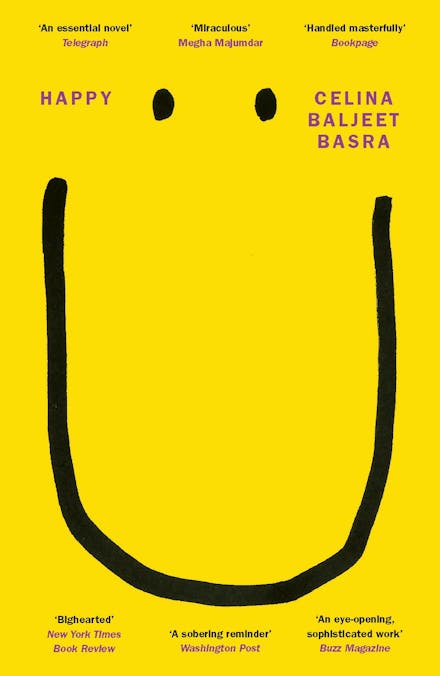
Happy: An imaginative and innovative debut novel - 'An essential novel' Telegraph
Formats & Editions


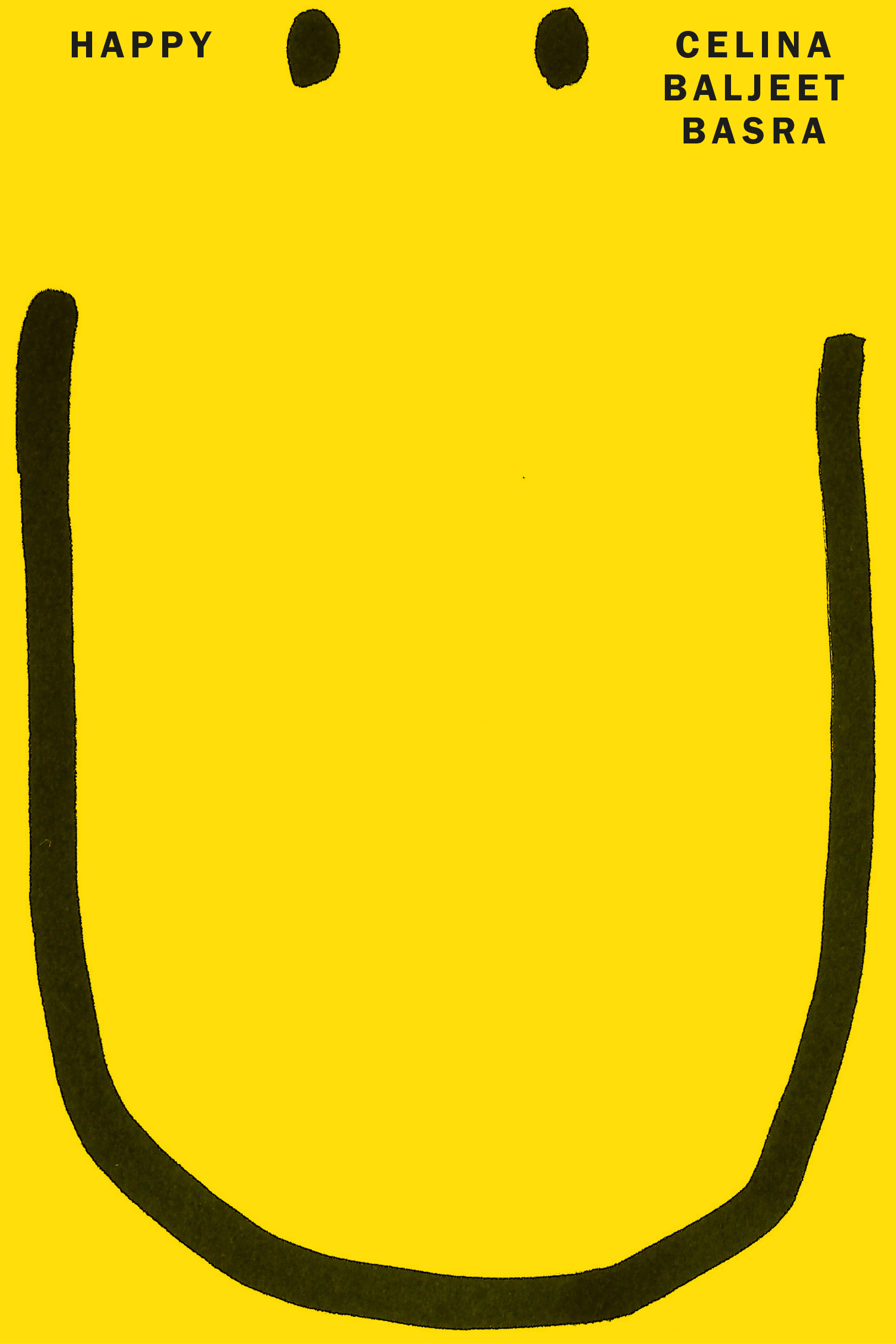
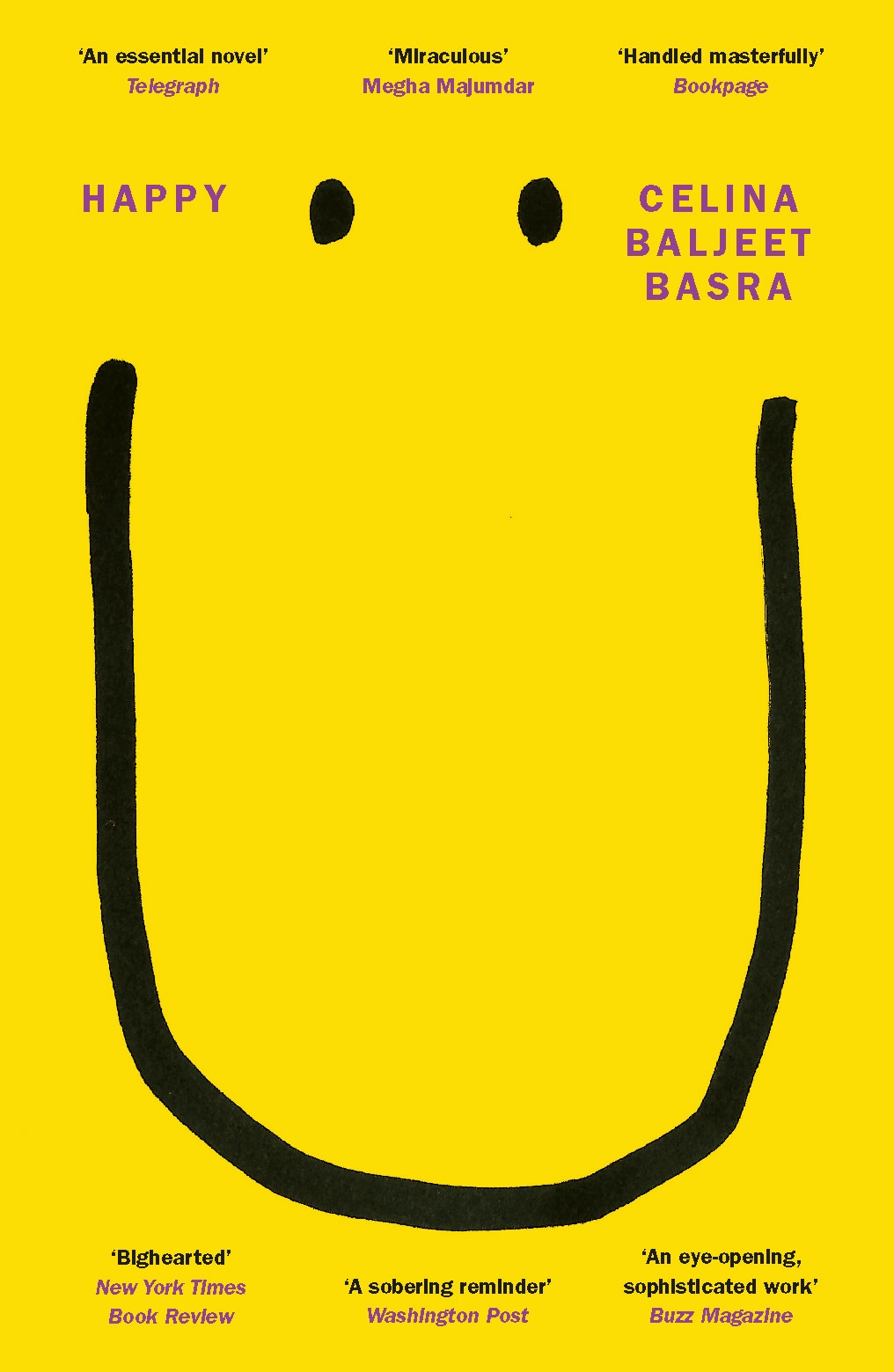
'This novel is genius . . . strange and superb . . . radiant and exhilarating' THE TELEGRAPH
'A magnificent attempt to help us understand the mixture of optimism, self-defense, hope and delusion[needed] to make the monumental choice of whether or not to leave home' NEW YORK TIMES BOOK REVIEW
' A sobering reminder' WASHINGTON POST
'Leaping, chattering, dancing atop this conundrum [of global migration] comes the hero of Celina Baljeet Basra's debut novel, Happy Singh Soni, his head bursting with ideas, his heart set on gargantuan dreams' NEW YORK TIMES
A starry-eyed young cinephile leaves his rural village in India with big dreams, only to find himself trapped in menial jobs and forced to work off a debt he may never repay.
In a small farming village in Punjab, India, a boy crouches over his brother's phone in a rapeseed field watching clips of Godard's Bande a part on YouTube.
His name is Happy Singh Soni and when he's not sleeping among the cabbages and eating sugary rotis, Happy dreams of becoming an actor, one who plays the melancholy roles; the sad, pretty boys, rare in Indian cinema. He plans a clandestine journey to Europe, where he'll finally land a breakout role.
After a nightmarish passage to Italy, Happy still manages to find relief in food and fantasy, even as he is forced into ever-worsening work conditions on a radish farm by the syndicate involved in smuggling him to Europe to pay off the supposed debt they claim he has accrued. While disillusionment amongst the farm workers rise, Happy will find the love - and tragedy - that his favourite films always promised.
At turns funny and heart-breaking, sunny and tragic, Happy is a formally ambitious novel about the psychic fissures produced by the splintering of nations, and the lovely, generative, artful coping mechanisms created by generations of diasporic people. With this ingenious, daringly cinematic debut, Celina Baljeet Basra argues for the things that are basic to human survival: food, water, shelter, but also pleasure, romance, art, and the right to a vivid inner life.
More praise for HAPPY:
'A MIRACULOUS NOVEL' MEGHA MAJUMDAR
'PLAYFUL AND PROFOUND . . . USING WRY HUMOUR TO DELIVER A DEAD SERIOUS MESSAGE' MELISSA FU
'A BONKERS STORY THAT READS LIKE A FINE TEN-COURSE MEAL' GARY SHTEYNGART
'A FANTASTIC LITTLE GEM OF A BOOK' CHIKODILI EMELUMADU
Praise for Happy
-
A zany comedy about human trafficking? This novel is genius . . . strange and superb . . . radiant and exhilarating . . . The achievement of Basra's prose is that this arc neither exploits Happy nor the reader. We might look back to Happy's own beloved era of cinema for forerunners who dance to the beat of a different drum, outsiders who insist a better world is possible, protagonists who, if fantasists, possess the resourcefulness to survive a brutal and callous world. We can claim that we respect the humanity of the dispossessed, the exploited or the systematically oppressed, but to recognise it in fiction, as Basra has, takes this level of depth and artfulness. Despite the devastating conclusion, this is not so much a tragedy as a weaponised comedy. Politically, it's an essential novel, with an urgency that avoids the didactic - preaching neither to the converted nor the apostate. - The Telegraph
-
The setup is familiar, but Basra makes it new . . . Basra is making a magnificent attempt to help us understand the mixture of optimism, self-defense, hope and delusion that Happy needs to make the monumental choice of whether or not to leave his home, move to a faraway place and face all the deceptions and misery that might await. By fragmenting the picture, and by playing with voice and structure, Basra invites us to experience Happy's emotional journey at its most unfiltered, intimate level. She's thrown away conventional narrative, and the outlandish chaos she creates conveys both the exuberant folly and dream-fueled logic that lead Happy to act. - The New York Times Book Review
-
Basra has a penchant for surrealism. Happy in many ways resembles the ingenue at the center of Yoko Tawada's dreamlike novel The Naked Eye, a film-obsessed Vietnamese abductee in Paris. Basra's plot by contrast, calls to mind Nabarun Bhattacharya's cult classic Harbart, a tragicomedy set in Kolkata that begins and ends with the death of its titular character . . . As the work wears Happy down, his optimism grows more complex, transforming into a kind of empathetic, almost critically conscious hope . . . a sobering reminder that stories about individual heroism can divert focus from the exploitative conditions that compel them to act in the first place. Tragedy, on the other hand, does not obscure the power of the hero's adversaries. Instead, it renders this power unmistakably visible. For Basra, tragedy also highlights the value of the simple needs and pleasures imperiled by criminal labor practices. - The Washington Post
-
Playful, funny, and wildly free, Happy inhabits the seam between beauty and tragedy. A miraculous novel.
-
A bonkers story that reads like a fine ten-course meal.

Find a book you'll love, get our newsletter
Hachette Australia acknowledges and pays our respects to the past, present and future Traditional Owners and Custodians of Country throughout Australia and recognises the continuation of cultural, spiritual and educational practices of Aboriginal and Torres Strait Islander peoples. Our head office is located on the lands of the Gadigal people of the Eora Nation.

This site is protected by reCAPTCHA and the Google Privacy Policy and Terms of Service apply.
© Hachette Australia, All Rights Reserved · Site by Chook