


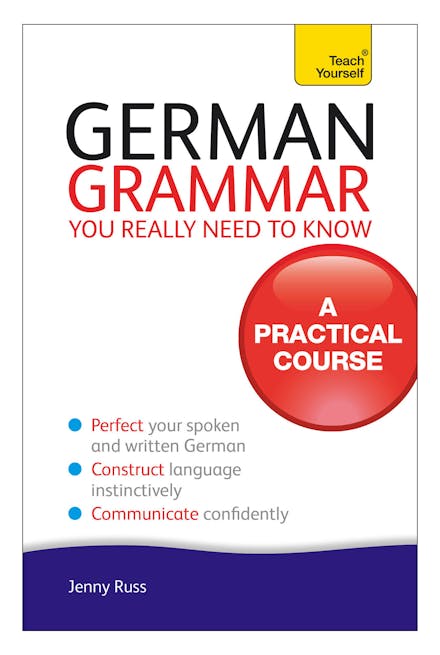
Essential German Grammar: Teach Yourself
Formats & Editions


Is this the right book for me
Want to get more out of your study of German
Essential German Grammar is an up-to-date introduction to German grammar. You don't need to know a lot about grammar before you start. Everything is explained simply and there are lots of examples to illustrate each point. Unlike more traditional grammars, Essential German Grammar is structured so that you can look up language forms according to what you want to say, even if you don't know the grammatical term for them. If you already know some grammar, then you can use the 'reference grammar' section at the back of the book to look up the points you need.The course consists of 21 units illustrating the various uses to which the language can be put, for example, giving instructions or talking about the recent past. The more traditional reference grammar deals with grammatical structures, such as the imperative or the perfect tense. All grammatical terms are explained in the glossary at the back of the book. Each unit contains exercises for you to practise what you have learnt and there is a key at the back of the book for you to check your answers. The new page design in this edition means that the book is even easier to use and the main headings are in English so that you can find your way around the book quickly. This edition contains a 'taking it further' section which will direct you to further sources of real German.
Essential German Grammar will help you to understand and manipulate German grammar with confidence because:
- you need no prior knowledge of grammatical terminology to use it;
- the approach is accessible and supportive;
- the examples are clear and in context;
- exercises help you practise every point.
Now in a brand new edition with new, easy-to-follow page design and interactive online features.
Essential German Grammar includes:
Chapter 1: Asking for and giving personal information
Chapter 2: Introducing and identifying people, places and things
Chapter 3: Expressing existence and availability
Chapter 4: Expressing location
Chapter 5: Talking about the present
Chapter 6: Expressing likes and dislikes
Chapter 7: Expressing wants and preferences
Chapter 8: Expressing permission and ability
Chapter 9: Expressing obligation and necessity
Chapter 10: Asking for and giving opinions
Chapter 11: Talking about habitual actions Chapter 12: Expressing possession
Chapter 13: Giving directions and instructions
Chapter 14: Making requests and offers
Chapter 15: Describing people, places and things
Chapter 16: Referring to future plans and events
Chapter 17: Describing the past
Chapter 18: Talking about the past
Chapter 19:
Find a book you'll love, get our newsletter
Hachette Australia acknowledges and pays our respects to the past, present and future Traditional Owners and Custodians of Country throughout Australia and recognises the continuation of cultural, spiritual and educational practices of Aboriginal and Torres Strait Islander peoples. Our head office is located on the lands of the Gadigal people of the Eora Nation.

This site is protected by reCAPTCHA and the Google Privacy Policy and Terms of Service apply.
© Hachette Australia, All Rights Reserved · Site by Chook