


Eighty-Nine Questions for After, a wise and beautifully written middle-grade novel about finding answers to the big questions in life, is on shelves July 28, 2026.
Dear Reader,
If you have read the blurb for Eighty-Nine Questions for After, you’ll know that this book deals with some heavy themes – death, grief, anxiety, mortality. At several points in the writing process, I did stop to question whether I should be writing a book for children that dealt with such things when the world itself is difficult enough. But I remembered – and was reminded by others – just how important it is to give children the opportunity to experience the full spectrum of emotions in a safe and gentle way. By watching trusted characters deal with adversity, children can see that difficult situations can be navigated and survived. Plus, reading has the power to help strengthen important traits like empathy and kindness.
I also remembered how much I loved and appreciated sad books when I was young. In fact, I often sought them out. I have a vivid memory of trying to borrow a book my school librarian worried I wasn’t ready for. I argued that I’d read Two Weeks with the Queen and could therefore handle it (I could.) I truly believe that kids can handle, and benefit, from big themes (and big words, for that matter).
That being said, Eighty-Nine Questions for After is not intended to be a sad book.
In fact, it’s filled with hope and friendship and adventure and the notion of living life to the fullest.
The idea for this story started with my own list of unanswerable questions.
For years I’ve half-joked that I hope there’s someone in the next life who can answer all my questions because I can’t stand not knowing. Things like what happened to JonBenet Ramsey and Madeleine McCann, plus many personal-level questions like the whereabouts of vanished items or the secrets buried with my grandparents (stories for another book, perhaps). Maybe one day I’ll know the answers to all these things, but, in the meantime, I decided that this quirky habit should belong to a book character.
That character ended up being Ester Star, a curious, big-hearted worrier with a pathological fear of dying and her own list of questions.
To contrast with Ester, I knew I needed a character who had lived a much larger life. Who better than someone who had experienced Australia’s travelling circus heyday? Enter Joan, an elderly lady with just one question, one she wishes she could have answered before she dies.
With the help of some new friends, Ester sets out to answer this question and is repeatedly thrown outside her comfort zone. The people Ester meets and the stories that she hears along the way were inspired by true accounts of this fascinating part of Australian entertainment history.
I hope you will love the eclectic cast of characters who were so much fun to write and enjoy reading through Ester's list of questions which were so much fun to research (all 89 of them!).
And thank you, again and always, for all your support.
Love,
Ashleigh
-
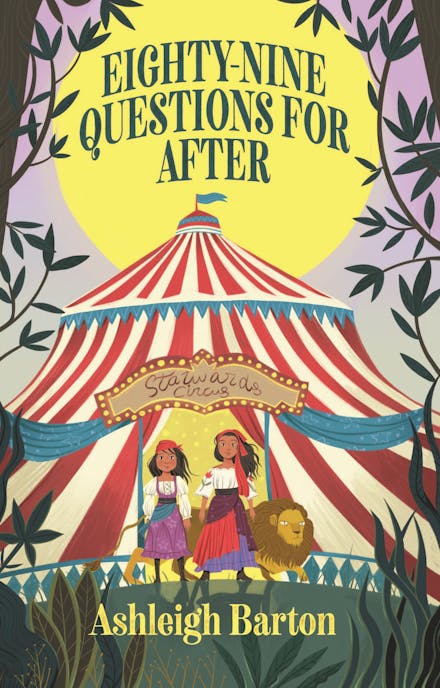 A wise and beautifully written middle-grade novel about finding answers to the big questions in life, from popular children's author Ashleigh Barton
Latest news

Hachette Haunts
Our Halloween reading guide!

Mediterranean Roast Lamb

Blueberry Cheesecake

Chicken and Black Bean Traybake

High-protein Pancakes

The Richell Prize Longlist 2026
The longlisted writers for the 2026 Richell Prize for Emerging Writers

Peter FitzSimons' The Race to the Top of the World Tour
This year Peter FitzSimons is visiting Tasmania, South Australia, Western Australia, Victoria and New South Wales to talk about the epic true story of George Mallory and Edmund Hillary and the quest to be the first to conquer Mount Everest.

Celebrate the release of THRESHING DAY by Rebecca Yarros!
Check out the select stores across Australia hosting release events for Threshing Day, the latest book in the Empyrean series!

Book Club Questions for Tell Me Something True
Questions for your book club to discuss Michael Robotham's first book set in Australia.

Brooke Davis' No One's Looking Tour
The internationally bestselling author of Lost & Found hits the road!

Book Club Questions for The Frock Shop

Extract from The Frock Shop

Q&A with Michael Robotham
We spoke to Michael about his latest book 'Tell Me Something True'

Michael Robotham’s Tell Me Something True Book Tour
Meet bestselling author Michael Robotham as he tours Australia to promote his new book Tell Me Something True.

Father’s Day Gift Guide | 2026
From thrillers to history, inspiring memoirs to ground-breaking fiction, we have a great read for every dad.

Junior Book Club Guide for Eighty-Nine Questions for After
Lots for young readers to discuss in the touching middle-grade novel!

The Burn Book Tour

The Burn extract

Book Club Questions for The Burn

Reads with Rhythm

Dr Norman Swan The Brain Cliff tour

Myf Warhurst is going on tour!

Book Club Guide for Rat Daniels
Questions for your group to discuss this stand-out Australian debut.

Read an extract of Alma Vampires
Start reading the new paranormal romance series!
Find a book you'll love, get our newsletter
Hachette Australia acknowledges and pays our respects to the past, present and future Traditional Owners and Custodians of Country throughout Australia and recognises the continuation of cultural, spiritual and educational practices of Aboriginal and Torres Strait Islander peoples. Our head office is located on the lands of the Gadigal people of the Eora Nation.

This site is protected by reCAPTCHA and the Google Privacy Policy and Terms of Service apply.
© Hachette Australia, All Rights Reserved · Site by Chook