


From the Miles Franklin-shortlisted author of Leap comes an unforgettable new novel about fathers and sons, and the damage that can ripple through generations.
We think your Book Club will gain a lot from this book. Here are some of our suggested questions to guide your discussion!
After reading the novel, was Cool Water what you expected from the cover and blurb? How do you think the title reflects the book as a whole?
Events in the novel happen across two timelines. How did that affect you as a reader? Did you connect with one part of the story more than the other? How might the novel have been different if it had only been set in the present day?
Did you find Myfanwy Jones’s depiction of an Australian small town authentic? Is Tinaroo similar or different to any places you’ve visited or lived in?
‘… what Frank feared more was that all the men in his family are cursed. And that however hard he tried to be good, he would not be able to escape his shadow’ (page 19). How does the novel explore societal ideas of masculinity and what being a ‘good man’ means?
At one point, Betty refers to their father’s rage as ‘cranky’ and admits she ‘minimises it.’ If everyone is comfortable with the topic, discuss how violence shapes the lives of the Herbert family.
What are some other key themes of the novel, and how are they explored through the two narrative threads?
Did you find your perspective on Joe changed as the novel progressed? Why or why not?
How has Frank’s childhood and his relationship with Joe shaped who he is as a person? You could discuss the impacts on his marriage, his opinion of himself, and how he approaches being a father.
How important is the small-town setting and its community dynamic to Cool Water? In what ways might the plot or characters have changed if the Herbert family had lived in a city?
Why do you think Myfanwy Jones chose butchery as the Herbert family business? What cliches do you associate with an Australian butcher?
'You got on with things, you didn’t talk about them’ (page 26). Do you think this is an Australian way of thinking? Why or why not? If so, is this attitude changing?
Cool Water is told through various perspectives. How did this change the tone and pace of the book? How might the novel have differed if any of those perspectives had been omitted?
‘How do you turn up to let go?’ This is a question Frank continues to ponder throughout the novel. What do you think it means, and do you think it’s possible?
-
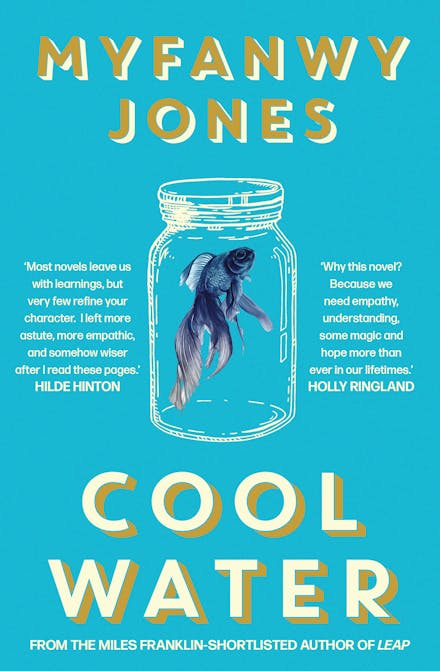
From the Miles Franklin-shortlisted author of Leap comes an unforgettable new novel about fathers and sons, and the damage that can ripple through generations.


Find a book you'll love, get our newsletter
Hachette Australia acknowledges and pays our respects to the past, present and future Traditional Owners and Custodians of Country throughout Australia and recognises the continuation of cultural, spiritual and educational practices of Aboriginal and Torres Strait Islander peoples. Our head office is located on the lands of the Gadigal people of the Eora Nation.

This site is protected by reCAPTCHA and the Google Privacy Policy and Terms of Service apply.
© Hachette Australia, All Rights Reserved · Site by Chook