


1. Before reading the book, had you heard of Marie-Madeleine Fourcade, or of the Alliance network or any of its members? If you hadn’t, why do you think that is?
2. In the early part of the book, Lester takes us back to Marie-Madeleine’s life before the war in 1920s-1930s Morocco. How was this a foundational time for Marie-Madeleine politically, culturally, and emotionally and how does it shape her decisions over the course of the story? How would the book have been different if Lester had solely focused on Marie-Madeleine’s life during WWII?
3. Marie-Madeleine had to make some difficult decisions in relation to her children throughout the book. Do you think she made the best decisions? How do you think her decisions might have affected her children? Is there anything you feel so strongly about that you would willingly step away from your loved ones for an unknowable period of time in order to pursue it?
4. Besides the two main characters of Marie-Madeleine Fourcade and Léon Faye, which of the secondary characters made the deepest impression on you? Why?
5. Should Marie-Madeleine have ordered Léon Faye not to return to France? And should she have spoken up when she saw the field of pink heather in England right before Léon departed? Would it have made any difference, do you think, if she had?
6. What role does love play in this book? What kinds of love are explored and how do these different kinds of love drive different characters at pivotal moments?
7. Towards the end of the book, Marie-Madeleine reflects: “Leadership means becoming a less moral person, not a better one.” Were there any choices and decisions that she made, or any actions that she took as leader, that you thought were immoral? How did her leadership style change as the story progressed? And how do her thoughts in this quote resonate (or not) with the state of the world today?
8. In one of the epigraphs in the book, Natasha Lester translates Marie-Madeleine’s words:
“Soon, nobody will know what they did, nor why they did it, nor whether it was necessary to do it; you may even pity them for dying for nothing. I want to know that they will not be forgotten and, above all, that you understand the divine flame that burned in their hearts.”
After having read the book, do you pity the agents or do you feel some other emotion for them? Do you think they died for nothing? If not, what exactly is their legacy?
9. Do people in contemporary society have the same kind of “divine flame” in their hearts for the issues facing us today as the agents of Alliance did? Who is a good example of someone in today’s world who does have that same kind of burning passion for their beliefs? And is the “divine flame” always used for the purposes of good?
10. Do you enjoy reading fictionalized stories of real people? What other books like this have you read and enjoyed?
-
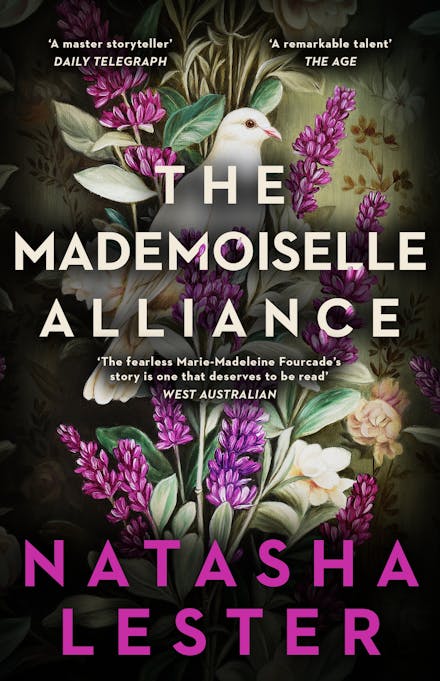
From Australian bestseller Natasha Lester, an epic, sweeping novel of one young woman who risks everything to lead the largest spy network in occupied France - and change the course of World War Two.


Find a book you'll love, get our newsletter
Hachette Australia acknowledges and pays our respects to the past, present and future Traditional Owners and Custodians of Country throughout Australia and recognises the continuation of cultural, spiritual and educational practices of Aboriginal and Torres Strait Islander peoples. Our head office is located on the lands of the Gadigal people of the Eora Nation.

This site is protected by reCAPTCHA and the Google Privacy Policy and Terms of Service apply.
© Hachette Australia, All Rights Reserved · Site by Chook