


Lay Maloney (find them on Insta @gaagum_) is a young genderfluid storyteller of the Gumbaynggirr and Gunggandji nations and South Sea Islander heritage based on Dunghutti Country. We chat to Lay about the inspiration behind their coming-of-age YA debut Weaving Us Together, about why it's so crucial for young people to feel seen, and the magic of those childhood books that stay with you.
What was the inspiration behind Weaving Us Together?
In 2021, I read the sequel to Aristotle and Dante Discover the Secrets of the Universe (2012) by Benjamin Alire Sáenz and of course had to re-read it. I was staying at my cousin’s place in Naarm during the intense lockdowns, sharing a room with my other cousin, at the time. That story has a deep love of place, and the author pulls from his own experiences that enrich the narrative and characters. I wished I had a book like that growing up. A story about what it was like to be someone like me and set in the place where my roots dig. I’ve had ideas for stories and books, but none of them ever stuck until that day. Sitting there with my little desk lap and tiny Surface Pro, I began to write a story inspired by own journey and the many girls I grew up with. It’s solely a work of fiction, yet there’s bits and pieces of myself woven into it.
Is there a book that was especially meaningful for you growing up?
My Dad taught me to read, and I fell in love with reading ever since. I mostly stuck to animal dictionaries and science books. My first novel was in the series Chronicles of Narnia by CS Lewis. Dad gifted me his tattered paperbacks that had that wonderful old-book smell and brown pages. It had the little inked illustrations of the characters, maps or the scene. I adored the generational mystery of Narnia the children inherited and shared. I’ve been fond of gentlemen mice and old wardrobes ever since.
What charmed me beyond the fantasy was the representation of the young people. They were children who had to make adult decisions, sometimes they had help and sometimes they didn’t. Imagine a child put in an impossible situation and forced to make decisions that change history and influence many lives. It comforted me on many occasions. I saw myself in Digory, Polly, Lucy, and others. It still has a very special place in my heart.
Why do you think it’s important for young people to read books with issues and experiences they can relate to?
Storytelling is the thread that weaves humans together. It’s the shared aspect of every culture. I’d go as far as to say story is humanity, it’s what makes us human. We can relate ability to share messages, knowledge or memories through word, dance, song, drawing, sewing etc. And books.
Books have always put on a pedestal in western society as tokens of knowledge. It’s been inaccessible for many people over many different eras. Nowadays, it’s more accessible than ever. With more people reading, there’s more writers than ever too. What books have been written before has not been representative of those who couldn’t write. This meant that many perspectives were never included in books. Our job now is to rewrite stories told about us but not by us, and to create new stories to inspire.
I’ve read many books which were not written for me, and I knew that whilst I was reading. I knew that because I knew nothing about the context beyond the book. All I knew was this character whose shoes I stepped into for a brief time. I shared their pain, their joy, their pleasure, their desires through the novel. Many times, I go on to research the book and the author and where and when they grew up. Why would they write this story for the world to read? Why did I read it?
Reading is the closest thing we have to mind reading, in my opinion. It’s a practice of cognitive empathy. To read and understand, you must look with your heart instead of your eyes.
Young people need to feel seen. They need to be cared for instead of shamed or dismissed. By including experiences of young people in books, they are given an audience that can see them for who they are from a perspective of love, faith and thoughtfulness rather than hate, ignorance and criticism.
What do you hope readers take away from Weaving Us Together?
Weaving Us Together only scratches the surface of what young Blackfullas experience in this country. I want readers to finish this book with more questions than answers.
It might give words to how a young person has been feeling. It may bring up things they don’t know how to approach head on. It possibly will give them courage to keep going.
Whoever is meant to find this book will come across it. I believe that wholeheartedly. For some, this is going to bring comfort. A deep comfort knowing that they are not alone. Loneliness is a symptom of a larger problem, but I hope this book becomes their friend on their journey. One friend of many they will find in their long lifetime.
For others, this book will be difficult to process in ways that challenge beliefs woven into their upbringing. They may look at a mirror, or a photo, or a person completely differently if they have never come across a story like this before.
To all my readers, I hope you learn that love is power. You can change the world with love. Loving yourself, loving others, loving your culture, loving the place you are from… it empowers you in a way no one can ever take from you. And it is not the fluttery type of love I am talking about, what I am referring to is an unshakeable connection to the world around you and your own spirit. It’s looking in the mirror and seeing your Ancestors looking back. It is making boundaries with people. It’s creating safe spaces for everyone. It’s listening to your Elders. It’s being kind to every creature. It's caring for Country. It’s knowing everything you do now impacts the generations ahead of you. It’s a check in text to your bestie. It’s going to school because you want to know what the world has to offer. It’s falling for a girl wearing an ugly yellow jacket.
-
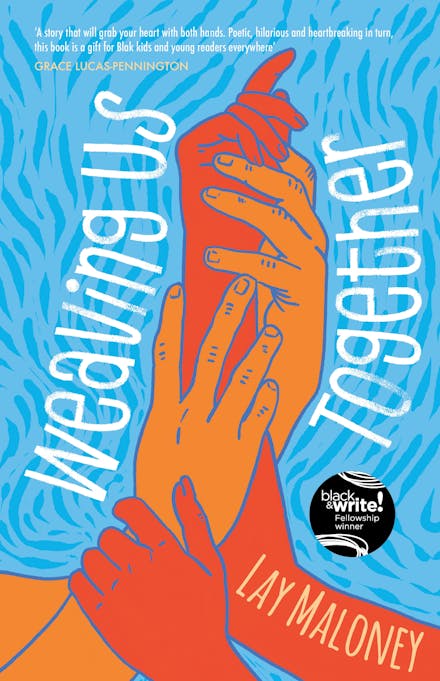
A sharp and insightful coming-of-age story about all the ways we find home from an exciting debut author and 2022 black&write! Fellow.
Latest news

Q&A with Megan Jacobson
We chat to Aussie YA author Megan about life, death: and TradWife TikTok...

Read an extract from The Waiting Place
Dive into this dazzingly good YA!

Favel Parrett's One for Sorrow Tour
Meet award-winning author Favel Parrett as she tours Australia to promote her new book One for Sorrow

The Richell Prize Shortlist 2026
Announcing the shortlistees of The Richell Prize 2026

Book Club Questions for No One's Looking
Find a book you'll love, get our newsletter
Hachette Australia acknowledges and pays our respects to the past, present and future Traditional Owners and Custodians of Country throughout Australia and recognises the continuation of cultural, spiritual and educational practices of Aboriginal and Torres Strait Islander peoples. Our head office is located on the lands of the Gadigal people of the Eora Nation.

This site is protected by reCAPTCHA and the Google Privacy Policy and Terms of Service apply.
© Hachette Australia, All Rights Reserved · Site by Chook