


Rebirth is on shelves Apr 28, 2026. Learn more and pre-order your copy here.
CHAPTER I
OCTOBER 1974
The rain tumbled ferociously. The storm’s rage was unnerving.
‘Baal has returned,’ Laila declared.
‘Baal?’ Nicolas asked as he swept trimmings of Laila’s hair from the vinyl floor. His salon was often quiet at twilight, and the opportune time for Laila to make her regular visits. The lone customer, she sat perched in a leather chair facing the mirror as the rain thrashed against the salon windows.
‘The storm god. He has returned.’
Nicolas turned and emptied the dustpan of trimmings into the bin, frowning with concentration. He didn’t seem to notice Laila drift into the fantasy realm of Canaanite gods.
‘The summer is long. The fields grow dry. And then, a crack of thunder,’ she continued, as if reciting a poem. ‘Baal arrives, floods the soil with rain, replenishes the fields with a new harvest.’
‘You’re quite the historian,’ Nicolas said, sounding impressed.
‘History is all I read.’
Laila’s words hung in the air, skirting her unspoken desire.
A separate conversation was afoot. Her eyes wandered shyly over
his face.
‘Which history do you prefer?’ Nicolas dropped down into the chair beside Laila and swivelled to face her.
‘Any. Phoenician, Islamic, Roman, whatever I can get my hands on.’
Laila was doing her best to mask her affection for Nicolas. Any acknowledgement of such was strictly forbidden for a young Maronite Catholic maiden. And having just turned eighteen, an appropriate age for suitors to begin enquiring, the pressure to maintain absolute propriety was as paramount as ever.
Nicolas gave her a searching look. ‘And how did you come to be drawn to history? Most girls your age only care about hair and nails and looking like Brigitte Bardot.’
‘I do that too. It’s why I come to visit you, isn’t it?’ she teased.
‘But I also like to get lost in the imagination s of our ancestors. When my father took me out of school, I didn’t want to stop learning. So I kept reading.’
‘Well, if he didn’t take you out of school, you wouldn’t be working at the tailor . . . and we wouldn’t be here now.’
Laila smirked. She had caught wind of Nicolas’s salon from her friend, Katya – her peer in both age and taste. Katya had recommended a new salon that had recently opened in the upper Jisr, just a fifteen-minute walk away from Laila’s work. Laila had made the journey several weeks ago, impressed by the handsome
coiffeur’s steady hands and charmed by his calm voice. She had been finding reasons to stop by ever since.
‘Speaking of my father, I need to get home.’
She had spent long enough at Nicolas’s salon on the upper slope of the eastern Beirut suburb of Jisr el-Basha. Baal had kept would-be customers away at this late hour, granting them a cherished moment of privacy.
‘He can wait a few more minutes.’ Nicolas smiled.
‘He can’t.’
Laila had finished work twenty minutes prior, and it was still a five-minute walk home from Nicolas’s salon – down the stone steps that snaked to the lower end of the Jisr, laid between the world wars, when France ruled over this land. The family home was a convenient few hundred metres from her workplace in the lower Jisr, where she had mastered the skills to sew and seam. That meant, however, that Laila had taken a long detour to reach the upper Jisr, carefully avoiding her home on her way to see Nicolas. There were no secrets in the streets of Jisr el-Basha. Watchful eyes shadowed every step in this corner of Beirut. And yet, Laila had managed to shield her heart’s intentions from those who would disapprove. Nicolas’s salon was auspiciously situated near the Jisr’s animated hub where the town’s residents mingled amid the bakery, grocer, butcher and other stores that made a contained life in the town possible. Their presence offered Laila ample opportunity to concoct a passable lie – an art she had perfected to squeeze in regular visits to Nicolas. But still, she had to get home within a reasonable amount of time. An explanation would be owed if she returned home beyond a modest delay. Laila assumed Nicolas, like all Lebanese men, understood her limitations. That a young woman would be bound by the rigidity set by a father was not uncommon in these lands.
‘I’ll drive you home,’ Nicolas offered.
‘If I’m seen in a car with you, I’ll be crucified,’ she said, her voice tight with fear – not of the town’s gossip, but her father’s wrath should he discover her discreet adventures to the salon.
‘But you can’t walk in this rain.’
‘I can’t be late either.’
‘Then let me drive you. No one is walking the streets now, and the windows will be covered with rain.’
The streets, as far as they could tell, were deserted. No cars had driven by, no pedestrians were foolish enough to confront the dark skies. Laila saw the opportunity.
‘Okay, but we must be quick.’
The first tremors of thunder had officially marked the end of summer. Roaring in from the Mediterranean, the storm clouds covered the ancient city like a dark drape.
From the divine view, Baal – the ancient Canaanite storm god once revered in these lands – looked down upon Beirut, a city shaped by layers of history. The sandstone villas, with terracotta-tiled roofs and triple-arched bay windows, spoke of a vibrant Ottoman past. The rounded Art Deco terraces paid homage to the French mandate that had followed the collapse of the Ottoman Empire after World War I. Clusters of concrete brutalist blocs, erupting across a choked skyline, reflected the chaotic post-independence boom that began
in 1943. With independence came a new role for this ancient city: the capital of the modern Lebanese state.
From the street view, the rain rushed its way through the city. Centuries-old drains struggled under its deluge, leaving puddle upon puddle for Laila and Nicolas to dance around to his car, a rusted 1960s blue Mercedes, parked along the street.
‘Hurry!’ Nicolas screamed, using his jacket to shelter Laila from the pelting rain.
‘Hurry yourself, open the door!’
It took only seconds for Nicolas to reach the passenger door – precious seconds in which the pair shared childlike screams and a thrill that made them forget Baal’s relentless downpour.
Nicolas bolted to the driver’s side.
‘Get in!’ Laila screamed from the safe confines of the car.
‘Unlock it for me!’
She lurched to the other side of the vehicle as he clumsily attempted to open the door with his keys – it was unclear who succeeded first.
‘You’re all wet!’ said Laila, as Nicolas pulled the door closed behind him.
‘As you said’ – he panted for air – ‘Baal has returned.’
Laila chuckled. The adrenaline from the rush to the car lowered her inhibitions. She extended her arm and wiped the raindrops streaming down his forehead.
It lasted no longer than a flash of lightning, but in that moment, their eyes connected and understood what could not be said.
‘We need to go,’ she said after a moment. She lowered her bodyand hid beneath the dashboard.
‘What are you doing?’ Nicolas laughed. ‘No one is going to see you . I can barely see the road.’
‘Just drive and don’t drop me in front of the house.’
‘You’re the boss.’
Tucked between the passenger seat and the dashboard, Laila’s view of the outside world was restricted to the roaring clouds above, but she could sense their location by the car’s swerves, accelerations and decelerations. She knew when Nicolas first took his foot off the pedal that they were approaching the intersection of the main road that led to the lower end of the Jisr and beyond – a road typically packed with vehicles, but not in this weather. Baal had washed away Laila’s fears that she would be spotted, but she took no chances and
remained hidden away.
‘You look like a cat trying to fit into a mouse’s burrow,’ Nicolas teased, glancing at Laila. ‘There’s no one in the Jisr – they must behiding from the rain.’
‘No one will punish you if we’re caught, so you stay above the steering wheel, and I’ll stay here.’
Laila watched his hands guiding the wheel. A left turn would send them to the neighbouring, mostly Maronite suburb of Dekwaneh. Straight ahead was not an option, as facing them was the eminent incline of Lebanon’s mountains, their summits shrouded by Baal’s mist. The mountains had guarded the Jisr’s dwellers for generations – jagged ridges brushed with a coat of majestic green, as if painted by God’s own hands. The Jisr had always stood on its own, cupped by the valley below the mountains, offering its inhabitants a detached existence from the chaotic travails of Beirut to the west and all that lay beyond the mountains to the east.
But change could be as swift as it was blinding. In Laila’s few years, the signs of urbanisation had edged ever closer. The wall of untouchable green was now dotted with new settlements, like an outbreak of pox on the innocence of a child’s soft skin. The pastures of orange and loquat groves that had kept neighbouring towns at an arm’s length had increasingly become polluted with concrete blocs, ensnaring the Jisr into the web of Beirut’s sprawling suburbia. And with the new capital’s expansion came its political sting. Nicolas guided the car due south at the intersection, offering a glimpse of the Palestinian refugee camp of Tel el-Zaatar, hastily erected in 1949 on the grounds of the Maronite monastery of Mar Roukouz. Originally intended as temporary shelter for thousands of Palestinians expelled from their homes during the 1948 Nakba – the mass displacement that accompanied Israel’s creation that year – the camp had since grown into a densely populated enclave. Its presence reshaped the geography of Jisr el-Basha and nearby suburbs, cutting them off from their mountainous vanguard. Laila felt the car slope downward. She knew it would only be moments before they reached the church of St Elias, the town’s towering soul. The locals drew pride from this humble yet impressive structure, which served as the centre of community life in the Jisr. It also acted as the town’s concierge, for immediately beyond lay the ruins of the Ottoman bridge that had given the town its name – Jisr el-Basha or bridge of the Pasha.
‘Drop me behind the church next to the cemetery, if you can.’
‘Anything for you,’ Nicolas spoke with tenderness. Laila met his affection with a fond smile.
‘Thank you,’ she said, crawling out of her burrow to exit the vehicle. Rain doused her head as she opened the door.
‘Run as fast as you can.’
In the seconds it took to run from where Nicolas had dropped her to her home, Laila got completely drenched. Her waves of hair now hung in thick clumps dripping with water. Her father, Fares, appeared suddenly in the front door. Has he been waiting for me the whole time I was with Nicolas? she wondered.
‘Where have you been? What the hell happened to you?’ her father demanded, his voice sharp.
‘I waited at work for the rain to stop, but it wouldn’t, so I ran,’ she said, in the apologetic tone of a pouting child.
Fares’s eyes softened, his frustration giving way to pity.
‘Okay,’ he said, stepping back to permit her entry. ‘Go and dry off.’
-
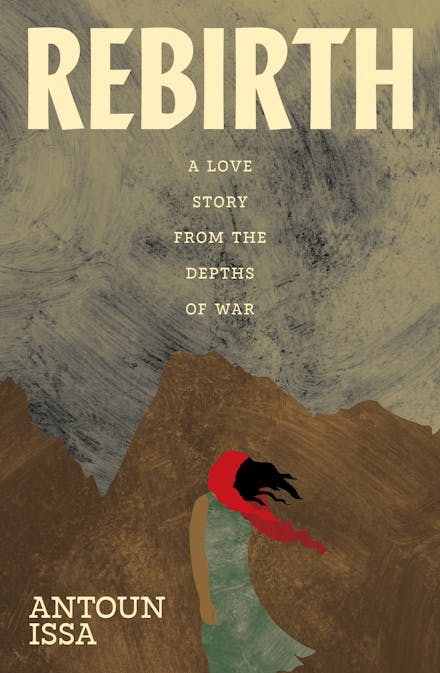
Antoun Issa powerfully captures his mother's true experiences of love, heartbreak and new hope during the violence of civil war.
Latest news

Read an extract from The Waiting Place
Dive into this dazzingly good YA!

Favel Parrett's One for Sorrow Tour
Meet award-winning author Favel Parrett as she tours Australia to promote her new book One for Sorrow

The Richell Prize Shortlist 2026
Announcing the shortlistees of The Richell Prize 2026

Book Club Questions for No One's Looking

Hachette Haunts
Our Halloween reading guide!
Find a book you'll love, get our newsletter
Hachette Australia acknowledges and pays our respects to the past, present and future Traditional Owners and Custodians of Country throughout Australia and recognises the continuation of cultural, spiritual and educational practices of Aboriginal and Torres Strait Islander peoples. Our head office is located on the lands of the Gadigal people of the Eora Nation.

This site is protected by reCAPTCHA and the Google Privacy Policy and Terms of Service apply.
© Hachette Australia, All Rights Reserved · Site by Chook