

PART 1: Who and what moulds your child
Some of the basics
Top line: Babies, children and young people are not small, early versions of adults.
*
That’s a mistake you still see made by some health professionals, pharmaceutical companies and assorted advice-givers who apply what they know about grown-ups to kids. Children work differently. Their immune systems still have trainer wheels and their brains are growing like topsy, making connections all over the place while they learn how to run the body, plan ahead, control their emotions and become someone in the world.
Which bits rule?
In the beginning it’s often the gastrointestinal system – the gut – that behaves as though it runs the body. Slowly and steadily though, the brain asserts its authority, at first unconsciously and then very consciously as any parent of a two year old knows with pleasure and pain.
The raw material the baby has to work with are the genes of their biological parents, their mum’s preparation for pregnancy, the health of the pregnancy, which part of town or country you live in, how clean is the air you breathe, how much education you – the parents – have had, how many other kids are in the family, how well your family functions, your pets, housing, the food you put on the table, whether you feel in control of your life and whether you are alienated by prejudice and disadvantage. All that flows to your and your children's psychological and physical wellbeing (which are so interlinked they’re often one and the same).
Add to that how much you talk to them in language that’s not baby talk, their early education and exposure to books and being read to, your parenting style which itself may be partly genetic, partly learnt from your parents, your mental health, your relationship with your partner if you’re co-parenting, your child’s social skills and their friends. Then there’s schooling and how caring and focused on the child and outcomes their school is. Do their teachers expect the best from their students and encourage them to achieve it?
There’s more.
How much kids move and what they eat count a lot, as do the predictability and stability of their routines, the careful balance between keeping them safe and focused and giving them autonomy, exposure to drug use and how you deal with bad behaviour and so on …
Those are just some of the influences and children can do very well even when these factors aren’t as ideal as you’d like them to be. Your house or flat may be tiny and a bit rundown. Your family may not be the traditional one or from the outside might seem a bit eccentric. You might not have graduated from high school with the marks you’d have liked and didn’t go much further in the education system. Life might seem to fall between payslips. Some days you’re so exhausted it’s hard to smile and feel good about yourself. Studies which have followed kids for years find that there are strengths that families can have in adversity which produce great outcomes. There can also be weaknesses in families where there is no obvious adversity that can increase the risk of a child with problems.
*
Bottom line: Despite all that might get in your way, you can still grow fabulous children who’ll become adults to be proud of. Hopefully the evidence in this book will help in some small way.
-
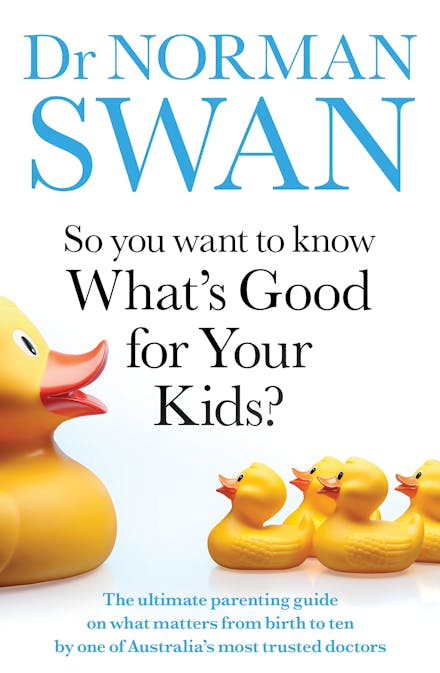
The ultimate parenting guide which cuts through to what matters most in raising a healthy, resilient child from birth to ten
Latest news

Read an extract from The Waiting Place
Dive into this dazzingly good YA!

Favel Parrett's One for Sorrow Tour
Meet award-winning author Favel Parrett as she tours Australia to promote her new book One for Sorrow

The Richell Prize Shortlist 2026
Announcing the shortlistees of The Richell Prize 2026

Book Club Questions for No One's Looking

Hachette Haunts
Our Halloween reading guide!
Find a book you'll love, get our newsletter
Hachette Australia acknowledges and pays our respects to the past, present and future Traditional Owners and Custodians of Country throughout Australia and recognises the continuation of cultural, spiritual and educational practices of Aboriginal and Torres Strait Islander peoples. Our head office is located on the lands of the Gadigal people of the Eora Nation.

This site is protected by reCAPTCHA and the Google Privacy Policy and Terms of Service apply.
© Hachette Australia, All Rights Reserved · Site by Chook