


We sit down and chat with Jane Yang, author of heart-wrenching historical fiction debut The Lotus Shoes.
Hi Jane! Thanks for answering some questions for us. How does it feel to have The Lotus Shoes almost out into the world?
Firstly, thank you so much for your support! It would be an understatement to say I’m thrilled – I’ve pursued this dream for over ten years! When I first received a physical copy of the proof, I carried it around in my bag, like a newborn, showing it off at every opportunity, sometimes even to strangers at the supermarket. I can’t wait to see The Lotus Shoes in my favourite bookstores and have readers get to know Little Flower and Linjing’s story.
How has your own family history inspired the story?
The Lotus Shoes is inspired by the family lore handed down to me by my grandmothers. Maa Maa, my paternal grandma, was small and fine-boned – a porcelain doll – with a delicate constitution and a soft voice. Maa Maa embraced the traditional feminine sphere, rejecting the opportunity to attend school, preferring to devote herself to domestic virtues like embroidery.
One of my most vivid childhood memories was the day Maa Maa first showed me a silk handkerchief embroidered with a double-sided goldfish – it looked so real that I thought it might swim. Alongside this treasure, she told me about Autumn Moon’s extraordinary fortune: this distant great aunt was born in the 1880s, during an era when a woman’s worth was still almost entirely judged by the size of her golden lilies. With natural feet, Autumn Moon had no marriage expectation beyond one to a kind but poor peasant, like her father. Though she was gifted with needlework, the most she had dared to hope for was a job as a sewing amah, thereby sparing herself from a life of toil in the rice fields. Yet, against all odds, her embroidery skills secured a marriage into a genteel home.
Her triumph benefited her female relations too, helping many of them to marry above their stations, and the good fortune trickled down the generations to my maa maa – she grew up in a privileged home with the luxury to embroider all day and proved to be as talented as Autumn Moon. Little Flower is an embodiment of Autumn Moon and Maa Maa.
What was your favourite part during the writing experience?
The first draft is the most exciting but also the most anxiety inducing. I love discovering the characters and exploring their world, and sometimes it’s thrilling to see them veer off to a different direction from my initial conception. Having said that, at this early stage, my mind often churns with questions and doubts. Will my editors like it? Is it good enough? Will I finish by the deadline? Still, there is nothing else I would rather do.
On a lesser scale, similar thoughts recur in the subsequent drafts until we reach line edits. Then, I can breathe a huge sigh of relief! With the pacing and story nailed down, I can focus on fine tuning the prose. Brainstorming with my editors is also something I really enjoy, especially as I have such a supportive and ingenious team! Their editorial advice either expand my ideas or help bring them into better focus, often stretching me beyond the limits I place on myself.
Do you have a favourite character in the book?
At the time when I started writing The Lotus Shoes, many of the historical fiction I read had very outspoken female leads who often also rejected all traditional feminine expectations. Whilst those character arcs are captivating, I wanted to create a heroine who would be more relatable to quieter personalities, someone who leans into tradition but isn’t bound by it – a woman who is strong but reserved – that’s Little Flower! Her journey from slavery to dignity and independence requires immeasurable courage and endurance, qualities that I admire.
Despite Linjing’s many flaws, I have a lot of sympathy for her too – in a world where bound feet are indispensable for almost all women, except those from the poorest family, Linjing’s lack of them gnaws at her sense of identity and confidence. She also craves affection and approval from her mother but nothing Linjing does seems to be good enough. There is no doubt that Linjing could and should be kinder to Little Flower but she is definitely not beyond redemption.
Can you speak to the power of language and how you have explored this in your book?
Without the power of language, The Lotus Shoes wouldn’t exist; to understand this slightly theatrical statement, I must first tell you about my childhood. As working-class migrants to Australia, with very little disposable income, my family’s main source of entertainment was VHS videos imported from Hong Kong. Everything about those historical melodramas, from the costumes, the beautiful locations, to the bygone customs, captivated me.
The shows also helped expand my Cantonese vocabulary, but by my twenties I preferred a subtler form of storytelling, which is more common in U.S. and British dramas, like the BBC productions of Jane Austen’s works. Without the Hong Kong shows, my Cantonese suffered. Even so, when we visited Hong Kong and Guangzhou, where everyone spoke Cantonese, I felt a strange ancestral pull – akin to a homecoming even though I have never lived in those places. This feeling enhanced my ability to immerse into Little Flower and Linjing’s world as I wrote their story.
Are you working on any new projects currently?
I have almost finished the second draft of my next novel – the story has two interwoven perspectives and timelines.
In 1906 Shanghai, amber-eyed Scarlet is the daughter of a Chinese woman and an English physician. Aside from her unusual eye colour, Scarlet feels as plain as a sparrow with little hope of inspiring romantic love. Though her heart yearns for passion, to avoid disappointment, she is determined to channel all her energy into a midwifery career and devote her life to help other women. But Fate has other plans for Scarlet.
A century earlier, beautiful and sweet-tempered Jiayi is a scullery maid on the Gu Estate, in Cloud Mountain, a remote village in central China – her one wish is to be chosen as a concubine for the handsome and accomplished Qilong, the heir. Heaven seems to answer her prayers when she becomes his “Little Wife,” an ambiguous position in the household, but Jiayi, naively, believes it’s a trial phase before he marries her. Life feels too good to be true and Jiayi thinks her future is set but Destiny is a cruel jester.
Scarlet and Jiayi’s lives will intersect in an unexpected way, forcing them to make daunting choices as they grapple with faith and doubts. Their story echoes gothic classics like Jane Eyre and Rebecca.
-
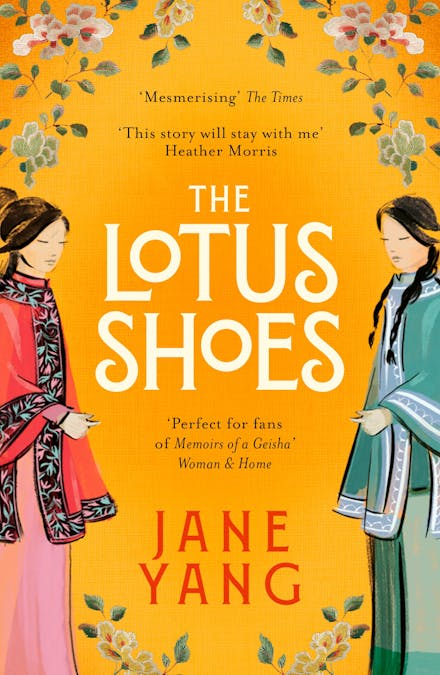
An astonishing book club novel set in 1800s China. Little Flower is sold into slavery, and Linjing into marriage . . .
Latest news

Read an extract from The Waiting Place
Dive into this dazzingly good YA!

Favel Parrett's One for Sorrow Tour
Meet award-winning author Favel Parrett as she tours Australia to promote her new book One for Sorrow

The Richell Prize Shortlist 2026
Announcing the shortlistees of The Richell Prize 2026

Book Club Questions for No One's Looking

Hachette Haunts
Our Halloween reading guide!
Find a book you'll love, get our newsletter
Hachette Australia acknowledges and pays our respects to the past, present and future Traditional Owners and Custodians of Country throughout Australia and recognises the continuation of cultural, spiritual and educational practices of Aboriginal and Torres Strait Islander peoples. Our head office is located on the lands of the Gadigal people of the Eora Nation.

This site is protected by reCAPTCHA and the Google Privacy Policy and Terms of Service apply.
© Hachette Australia, All Rights Reserved · Site by Chook