


Start reading an extract of Person in Progress by Jemma Sbeg. The book releases on 29 April 2025 and is available for pre-order now.
Introduction
I spend a lot of my time thinking about my twenties: this infamous decade known for being as chaotic and frustrating as it is exciting and divine. This fleeting chapter in our lives that promises nothing but uncertainty. The strange vacuum between adolescence and adulthood where we feel like we still have a foot in each world, torn between diving into the responsibility of adulthood and clinging to those last remaining moments of complete, unadulterated freedom.
Our twenties are my bread and butter, my biggest source of anguish, but also my greatest source of curiosity. I have examined this decade every which way, I have heard thousands of stories of how lost we all feel, how challenging it is to navigate love in such an unstable period, the mistakes and failures that haunt us, the endless decisions that feel exceedingly important and permanent. I have spent hours in the academic literature looking for some scientific explanation for why this is all so hard. At the time I am writing this, I am still very much in this period myself, trying my best to give advice to fellow travelers while still not having all the answers.
When I began my podcast, The Psychology of Your 20s, it acted as a permanent way to preserve my experiences and what I was going through at the time, almost like a digital diary. Since I was very young, I have been haunted by this idea that our memories are not permanent and can be reshaped and forgotten. I always used to think, “How can I know any of my experiences were real if I can’t remember them?” So I would frantically keep logs and notebooks and journals of all my most noteworthy, but also boring, day-to-day experiences.
The podcast was born from that desire to hold on to the past, by keeping track of the present. There was something already so special about my twenties that I knew I would want to look back on someday. It turned out that a lot of people could relate to what I was going through, and as more and more people joined our community, the podcast only grew until it transformed from a passion project to my full-time job. You listened on as I graduated university, had my heart broken for the first time, and then the second (and then the third), lost friends I considered soulmates, experienced great loss, death, unemployment, moved cities, fell in love again, struggled with my mental health, and tried to work through all I was feeling using the thing I trusted most: the science. This book is a culmination of all my experiences, along with those of so many of my friends and your own, to create a guidebook for this confusing decade so we can, hopefully, feel less alone.
This book is also not just for twenty-somethings. The more I’ve explored the milestones and experiences of this decade, the more I’ve realized how universal and lifelong they are. You could be in your thirties, your forties, maybe even your seventies, and still be struggling with love, trying to discover your purpose, healing childhood wounds, or wondering who you really are. It’s also for the people who are trying to better understand the tales and turmoil of this generation and why we see things differently than those who have come before us. Parents, teachers, colleagues, bosses, mentors, friends, loved ones: there is a lot you may not know or that has changed since your time.
As with any book, there may be parts you don’t relate to.
Maybe you’ve already found the love of your life so you don’t need to learn about the woes and psychology of breakups, or you don’t work a nine-to-five so the existential dread that accompanies that work doesn’t apply. That’s okay. You can read this book from cover to cover, or selectively. The message remains the same: This decade is hard, but there is an explanation as to why. More importantly, there is also a way through. So many of the things we experience in isolation—the fear, the uncertainty, the heartbreak, the loneliness—become much more manageable when we understand what’s really occurring below the surface and, also, when we have company. For all the hard moments, this period is one of extreme and wonderful growth, even if it doesn’t always feel like it. All those times you feel like you’re falling behind or wish you had all the answers are the times you look back on and say, “The person I am now was created in those moments.” There is great joy to be felt, serious elation and companionship to be found, that makes all the uncertainty worth it. If you knew how this decade would turn out or if you had all the answers, there would be no room left for surprises. That’s where we have the most fun, even if your twenties don’t end up being the “best years of your life.”
So, to all my fellow twenty-somethings: welcome. To all those a bit older: welcome back. Let’s uncover what this decade is really all about and unravel the elusive psychology of our twenties.
SECTION I
The Quarter-Life Opportunity
It happens like clockwork—we hit our mid-twenties and suddenly everything we thought we knew flips. The quarter-life crisis is a rite of passage for each of us where we are forced to seriously consider if the life we have created so far is the one we want to continue with. In my mind, it is a season of shedding—shedding old friends, old values, old dreams, old places, and most of all the version of us we were before. As with any kind of transformation, it’s going to be painful because we are saying goodbye to a lot of what we were comfortable with and had grown accustomed to. On top of that, there is naturally a period between when we shed the old version of ourselves and when we discover the new version of ourselves. Moving from one to the other requires risk, mistakes, and doing some real deep soul-searching about who we are and what we want. Understandably, we feel very lost during those moments. A therapist of mine once described it as having a faulty compass in a desert and just having to place your bets on going in one direction, without having any clue where you might end up.
But what if we reframe the quarter-life crisis to be a quarter-life opportunity?
There is something so romantic about new beginnings and fresh starts. It would be a tragedy to stay the same for your whole life, to be the same version of you at eighty that you were at eighteen, and that is the opportunity provided by your quarter-life crisis: the capacity to evolve. This is not a crisis. This is an opportunity. Let’s discuss why focusing in on four defining elements of our twenties—mistakes, risk, decision paralysis, identity—can help us embrace the opportunity provided by the quarter-life crisis.
-
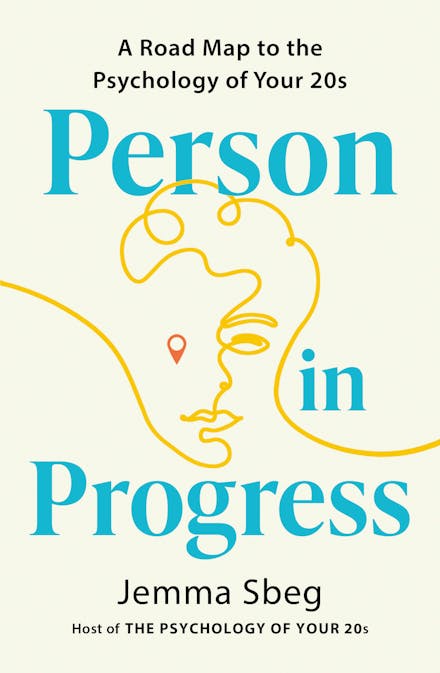
A roadmap to navigating the personal and professional transitions of your twenties, with practical insights and reassurance that you're not alone, from the host of the top podcast The Psychology of Your 20s.


Find a book you'll love, get our newsletter
Hachette Australia acknowledges and pays our respects to the past, present and future Traditional Owners and Custodians of Country throughout Australia and recognises the continuation of cultural, spiritual and educational practices of Aboriginal and Torres Strait Islander peoples. Our head office is located on the lands of the Gadigal people of the Eora Nation.

This site is protected by reCAPTCHA and the Google Privacy Policy and Terms of Service apply.
© Hachette Australia, All Rights Reserved · Site by Chook